

OBJECTIVE
provide a world-class catalog media solution that allows our customers to create, manage and optimize the use of catalog media assets to deliver high-quality visual content and increase and drive conversion.
USERS
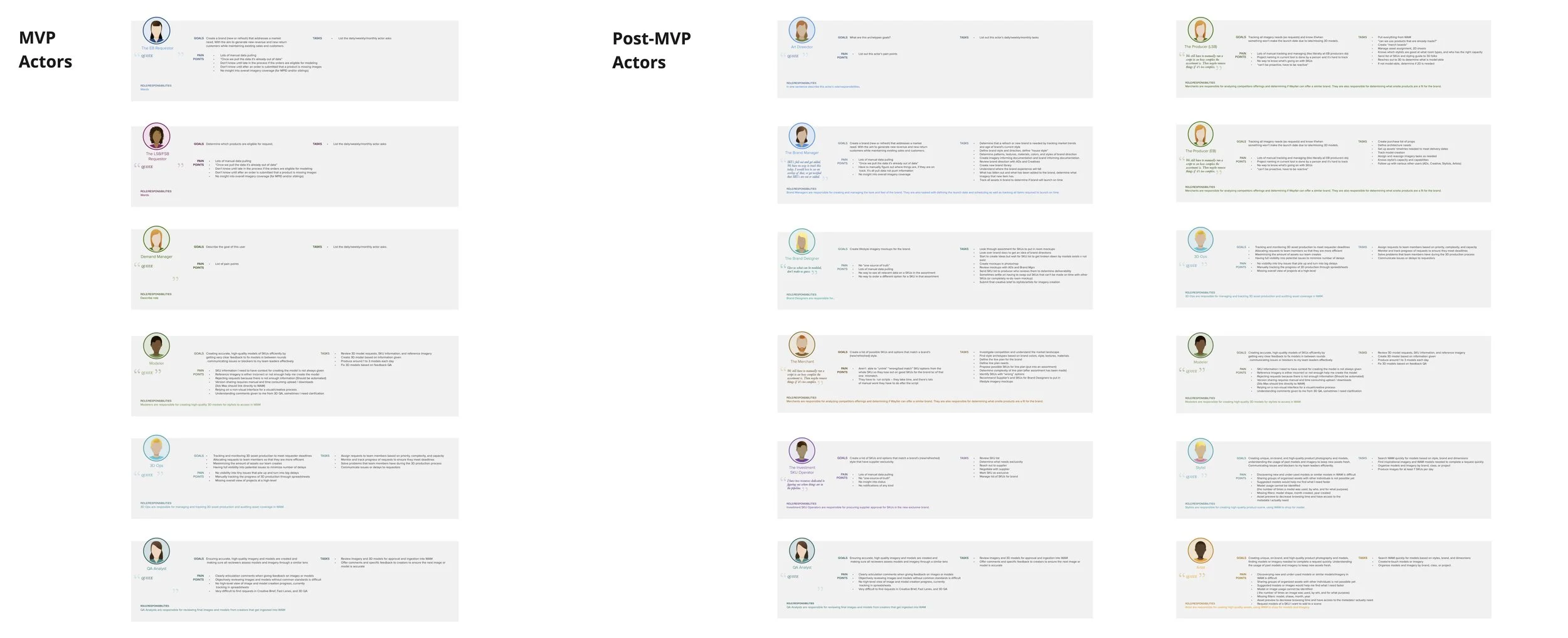
1- Wayfair internal customers
2- Wayfair internal/external creators
3- Suppliers
ECOSYSTEM APPROACH
Build our next generation Catalog Media platform as if it were a third-party commercial product - in order to foster the best product development practices and ensure that we create a platform that is customer and asset agnostic in order to maximize commercial flexibility.
4 major domain groups that map to the primary business domains wherein we create value:
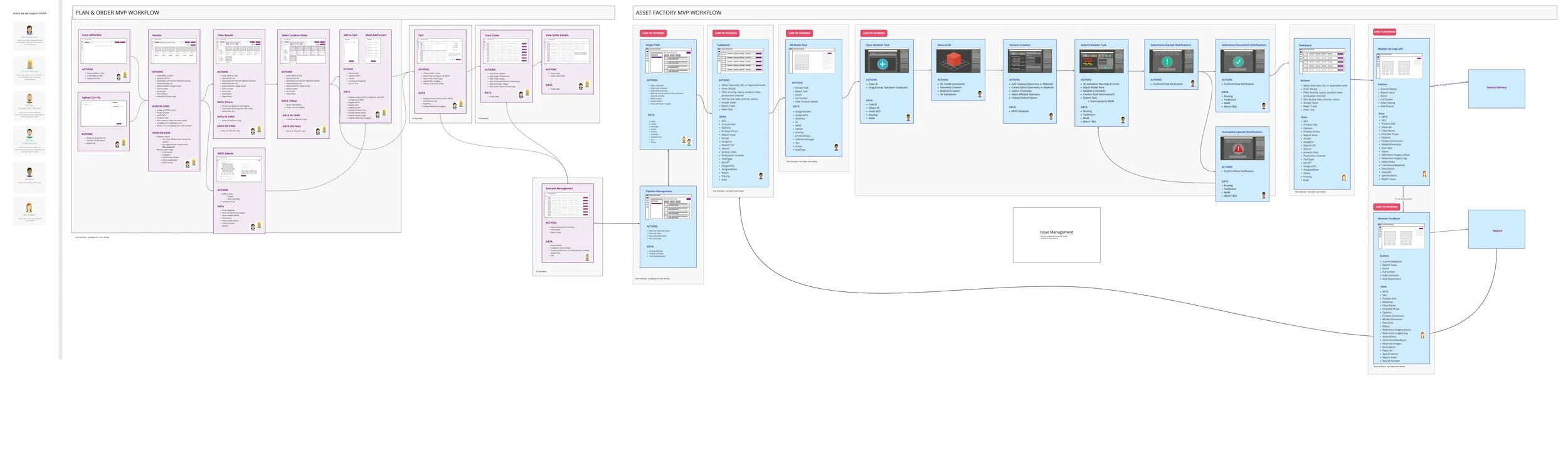
Plan & Request → Create → Manage → Distribute.
Microservices Ownership and Problem Statements:
1- Cookbook
What are the various available workflows for creating a given asset?
2- Pipeline Manager
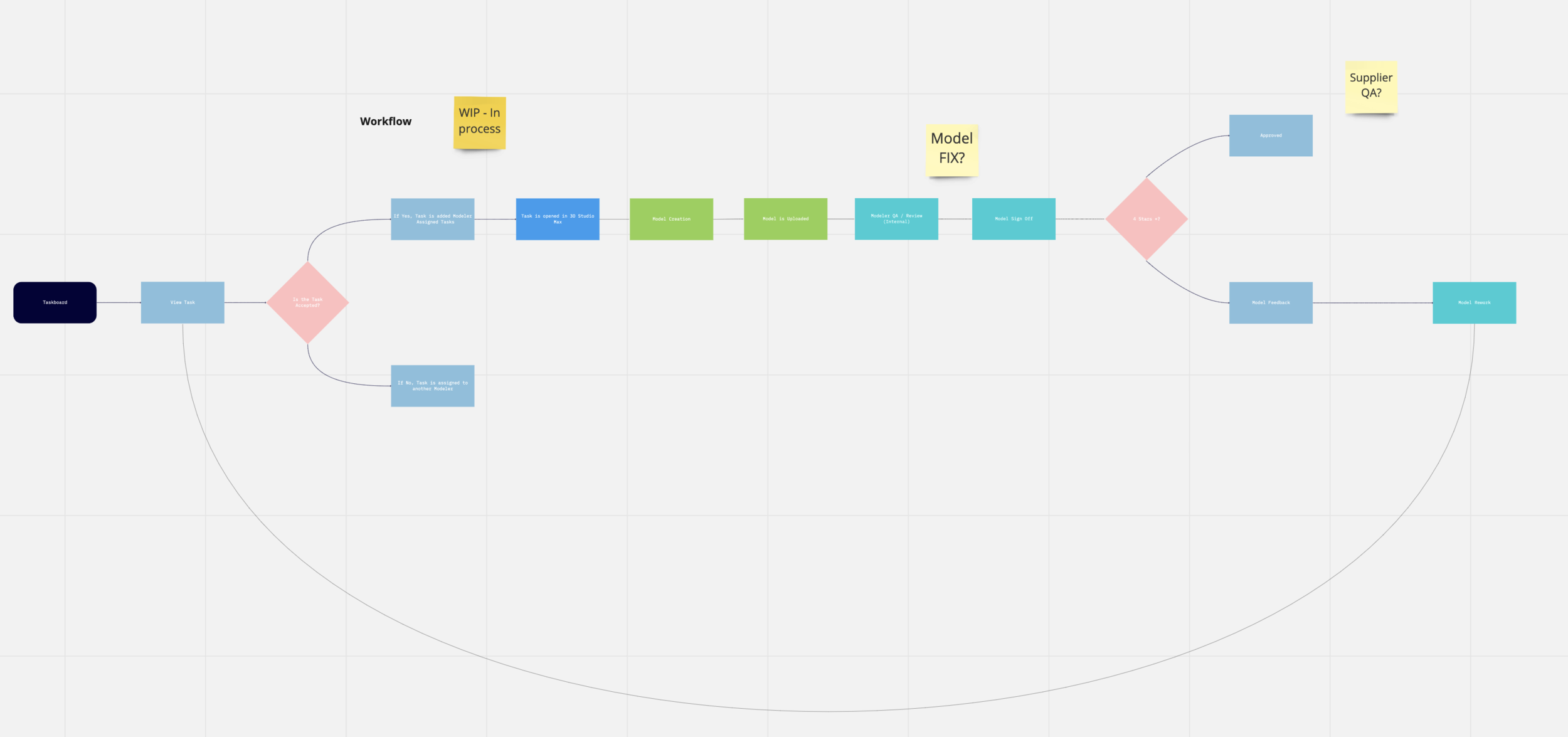
How do we manage ongoing creation workflows through coordinating and automating task flow?
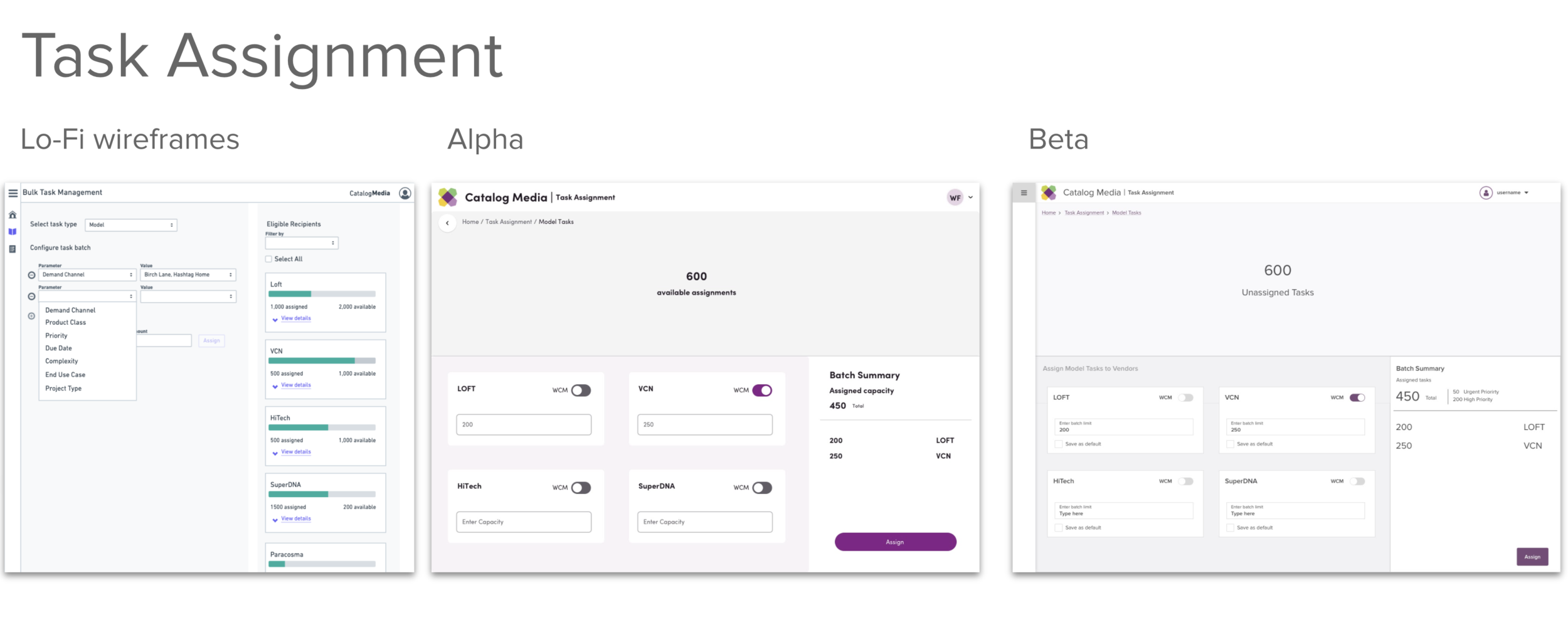
3- Assignment Routing
How do we allocate the production work amongst our team members and partners?
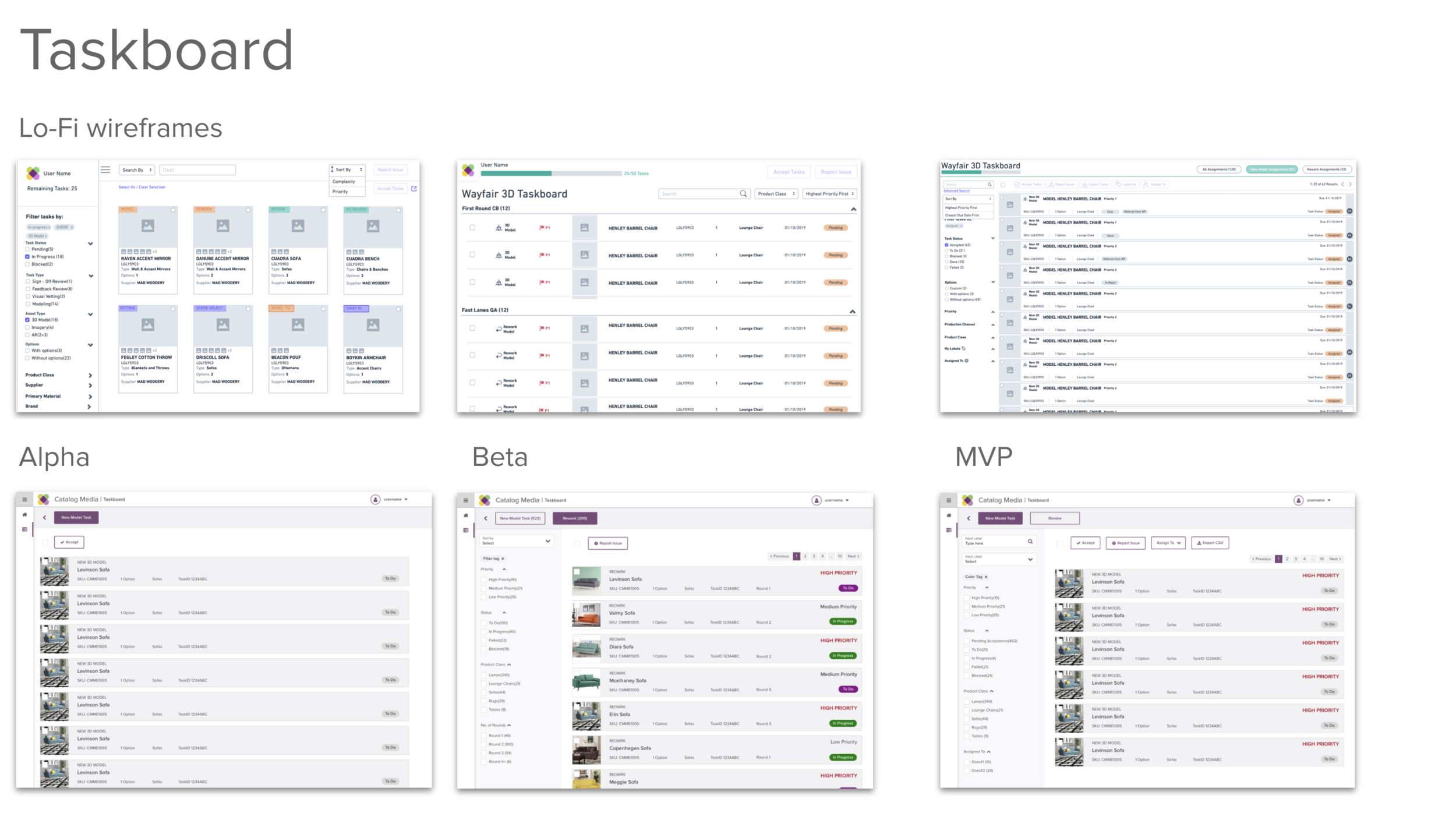
4- Taskboard
How do we optimize the experience of receiving and managing tasks?
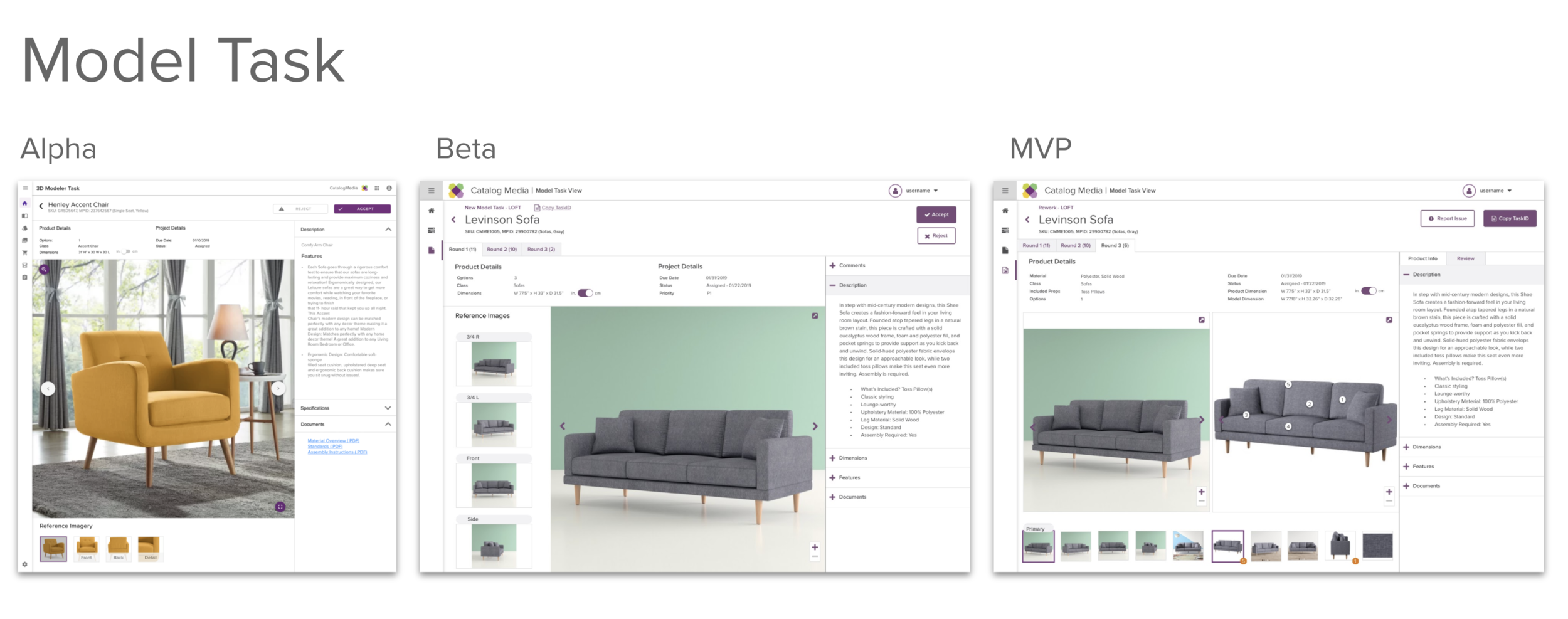
5- Modeler Task
How do we provide model-task related information in a digestible way for modelers?
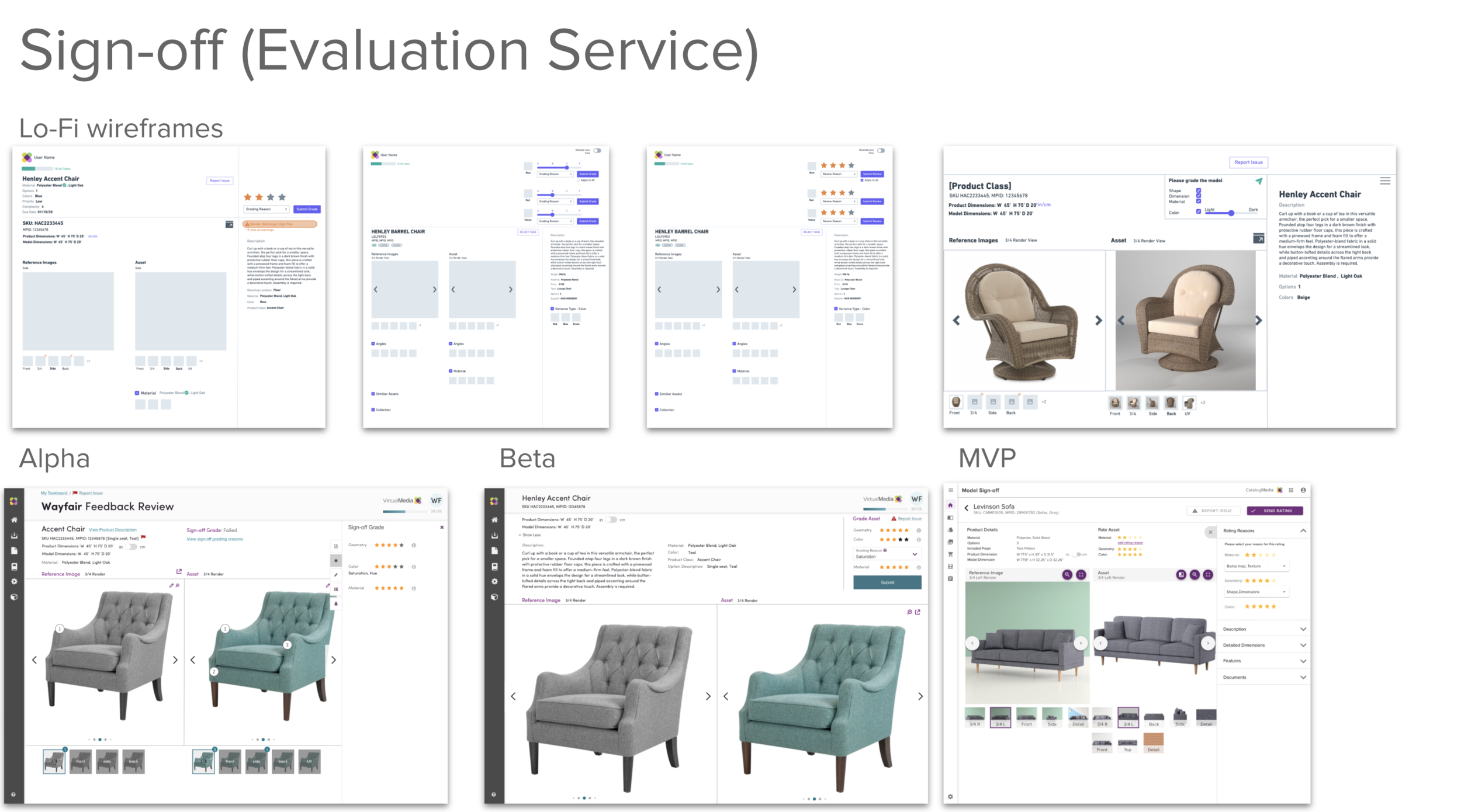
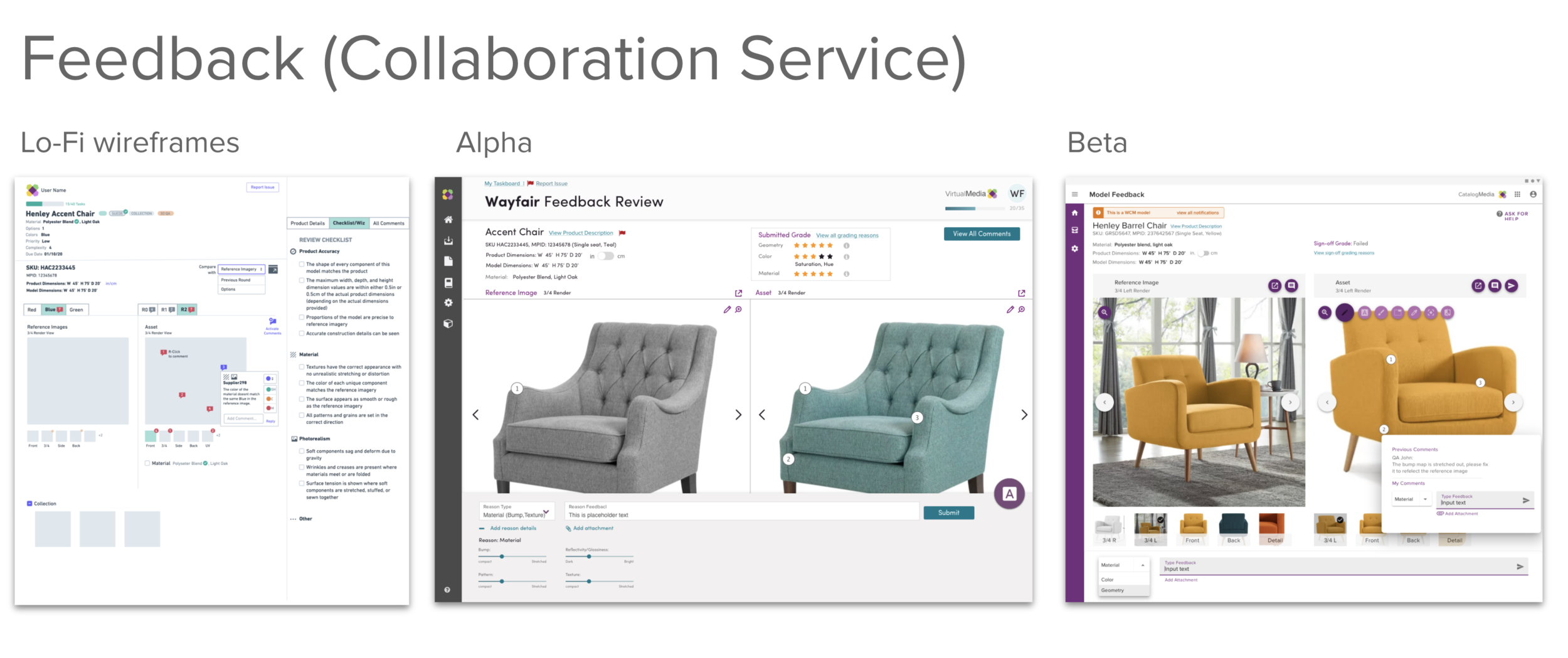
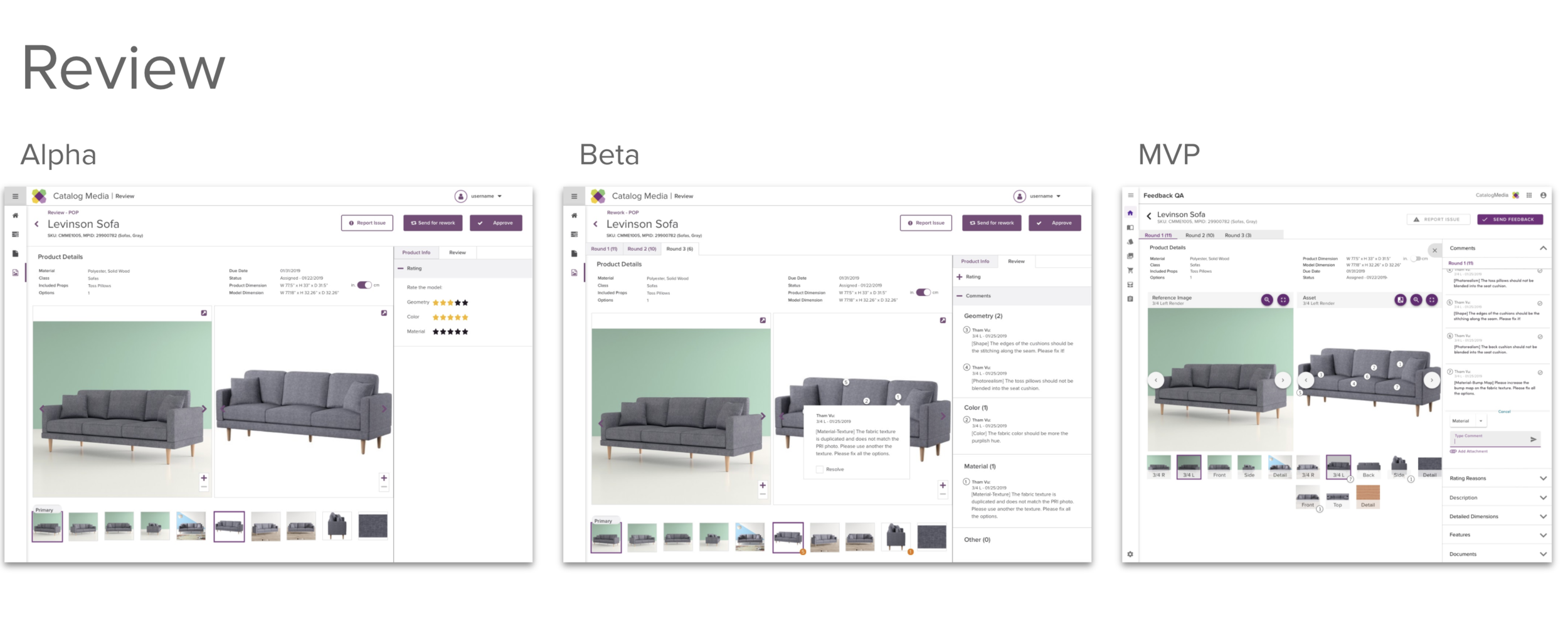
6+7- Review ( Evaluation + Collaboration microservices)
How do we efficiently and effectively provide feedback to ensure high asset quality?
8- Issue Management
How do we optimize the process of tracking and managing all of the issues that occur in the production pipeline?
GOALS
1- Increasing efficiency and visibility in the production workflow.
2- Supporting asset agnostic and configurable creation pipeline.
3- Decreasing total asset turnaround time.
4- Enforcing quality standards for created assets.
PAIN POINTS
1- Rigid, single-workflow tools
2- “Black box” processes
3- Inefficient, time-consuming workflows
4- Subjective quality standards
5- Slow, unfriendly tools
DESIGN PROCESS
1- Discovery/Primary Research
2- Storymap
3- Determine case scenarios
4- Release plan
5- Users/Stakeholders Feedback
6- Lo-Fid Prototypes
7- Tech/Design review
8- Prototype Testing
9- Design iterations
10- Hi-Fid Prototypes
11- User Testing
12- Build Backend/Frontend
13- Onboarding and documentation
Keep Going! ↻